
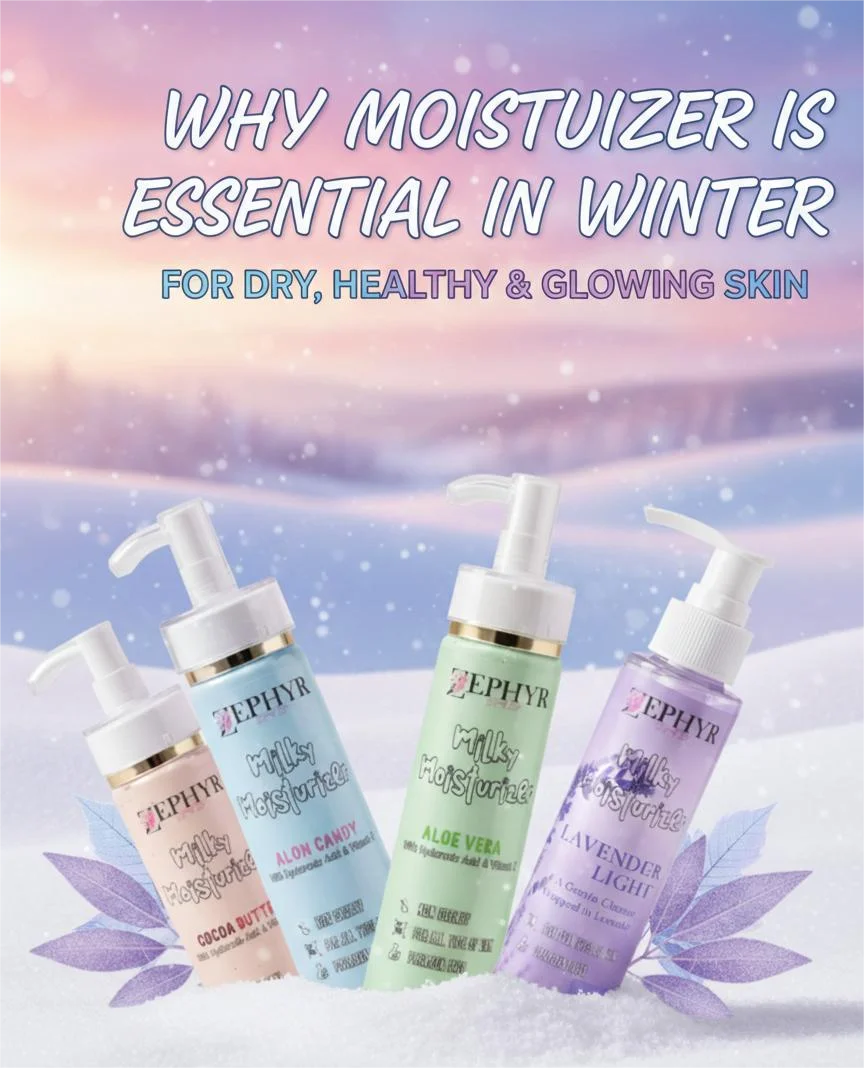
Winter might be comforting and all that, but it’s one of the toughest seasons on your skin. It’s the time of the year when the cold wind, low humidity levels in the air, heater on at home, and shower water all conspire against the skin without your even realizing it.
That is exactly why it is non-negotiable to apply a moisturizer during winter.
As skin care professionals would agree, winter is the season when your skin barrier is weakened by the weather. Without the right hydration, your skin wouldn’t be able to protect itself. We will take an in-depth look at why moisturizer is necessary in winter, its working process, and application method.
What Happens to Your Skin in Winter
During winter:
- Humidity levels decrease significantly
- The skin is morelayered
- Natural oils reduce
- The skin barrier gets weak
All these result in dry and itchy skin during winter. The truth is that without a moisturizer, it is impossible for your skin to retain moisture.
Dermatologist insight
It allows for the loss of moisture and exposure to the environment, and the moisturizer will go towards repairing this barrier.
Moisturizer: A Must in Winters
1. Prevents Moisture
Winter moisturizer helps form a barrier to lock water into the skin to prevent water loss through transepidermal water loss (TEWL).
2. Repairs the Skin
Ceramides, glycerin, hyaluronic acid, shea butter, and niacinamide are components that can repair the skin’s barrier function.
3. Relieves Dryness
Moisturizing helps prevent itchiness, dryness, and redness that come with the winter season.
4. Promotes a Healthy
Hydrated skin is able to reflect light well; that’s what gives people glowing skin during winter.
Best Time to Apply Moisturizer During Winters
- Right after washing your face
- On slightly damp skin
- Morning and night
- Reapply if skin feels tight
It also helps to retain water better within the skin.
️Ways to Choose a Good Winter Moisturizer
Search for:
- Rich but non-greasy texture
- Occlusives (shea butter,
- Humectants (hyaluronic
- Barrier repair agents (niacinamide,
Avoid:
- Alcoholic formulae
- Summer gels: Lightweight summer gels in extreme cold
Moisturizer Is for ALL Skin Types in Winter
- Dry skin: Requires more moisturizing creams
- Greasy skin: Light, moisturizing lotion is required
- Combination skin: Hydrates without clogging
- Sensitive skin: Fragrance-free, soothing formulations
Oily skin also becomes dehydrated during winter because not moisturizing increases sebum production.
Expert Tips on Winter Skincare
- Apply moisturizer 30 seconds after washing your skin
- Use a mild cleanser
- Avoid very hot water
- Layer products: cleanser → serum → moisturizer
- Hydrate adequately
- Apply sunscreen even during winter seasons
Final Thoughts
Winter doesn’t have to steal your glow. A great moisturizer can help you keep a healthy glow all winter long.
Frequently Asked Questions
Q1: Why does skin get dry in winter?
Cold air and low humidity lead to lower moisture, so there is a lack of moisture in the skin; this causes dryness of the skin.
Q2. Do I need to use lotion if I have oily skin?
No. Oily skin still requires moisturizing, especially during winter seasons to combat dehydration as well as excess oil production caused by it.
Q3: How often should one apply moisturizer during winter?
At least two times a day – morning and at bedtime. Apply again if your skin is feeling tight.
Q4: Do I need to switch moisturizers for winter?
Yes. Formulas in winter need to be richer and more nourishing compared with summer formulas.
Q5: Why is body lotion necessary during winter?
Absolutely. The skin on the body also dries quickly during the winter season and requires daily moisture.
Q6: Will using a moisturizer help in preventing
Yes. The appearance of hydrated skin is plumper, which helps eliminate fine wrinkles resulting from dryness.
Q7: What are the ingredients that are most suitable for winter moisturizers?
Its active components include hyaluronic acid, glycerin, shea butter and oils.


